
eBeam Evaporator
Model: ATC-2036-E-T EVAPORATION SYSTEMS
High-vacuum deposition system for thin film growth using electron beam evaporation. Enables precise deposition of metals and materials with controlled thickness. Suitable for micro- and nano-fabrication applications.
Location: SE1 154 (Cleanroom Class 1000)
MKS deposition monitor (SQC310) Manual: Thin Film Deposition Controller
ebeam evaporator Manual Applicable to SCIF Cleanroom System
Water Chiller Manual
Literature / Resources
Electron Beam Physical Vapor Deposition
Electron Beam Evaporation Explained
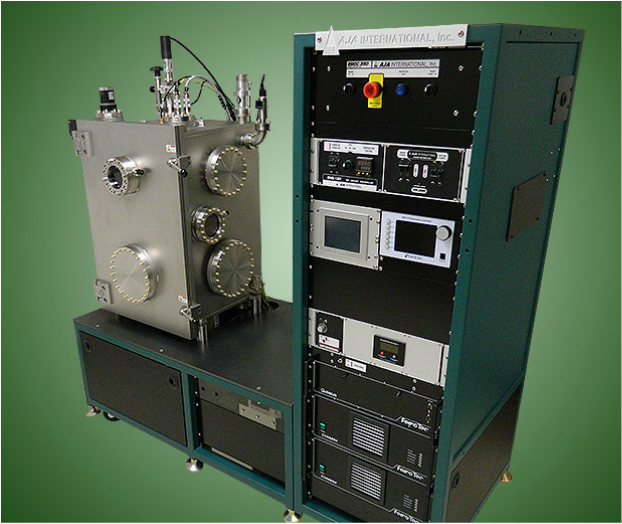
AJA International physical vapor deposition systems (6-pocket rotary e-beam source) offer exceptional value while delivering optimal performance and utilizing top-quality subcomponents. With this tool, we can deposit six different materials without breaking the vacuum.
The following metals are available for user deposition:
The following metals are currently available for user deposition: Au, Pt, Cu, Ti, Cr, Ag, and Al. These are the only metals provided by the facility. If you need to deposit any other material, you will need to supply your own source material along with the appropriate crucible. Cleanroom staff can assist with procurement of the material and the corresponding crucible.
Note: Usage of Au and Pt will incur additional material charges based on actual consumption, calculated according to current market prices from our supplier, Kurt J. Lesker Company.
A variety of materials/metals can be deposited with the ebeam.
Current Material Configuration (E-beam Source Pockets)
- Pocket 1: Gold (Au)
- Pocket 2: Platinum (Pt)
- Pocket 3: Titanium (Ti)
- Pocket 4: Aluminum (Al)
- Pocket 5: Silver (Ag)
- Pocket 6: Chromium (Cr)
Electron Beam (E-Beam) Evaporation System
The AJA International ATC Orion Electron Beam (E-Beam) Evaporation System is a high-vacuum thin film deposition tool used for depositing metals and other materials onto substrates through electron beam–induced evaporation. The system supports a range of physical vapor deposition (PVD) processes and is suitable for research-scale fabrication of thin films.
Key Features
- High-vacuum deposition environment
- Electron beam evaporation source for high-purity films
- Substrate holder with rotation and optional heating
- Multiple deposition configurations (e-beam, thermal, sputtering compatible)
- Integrated system interlocks for safety (vacuum, cooling, power)
- Programmable process control for deposition rate and thickness
Typical Operation Workflow
- Start the water chiller
- Power on the system
- Load substrate into vacuum chamber
- Secure substrate on holder
- Pump down to required vacuum level
- Select material and set deposition parameters
- Initiate electron beam evaporation
- Monitor deposition rate and film thickness
- Complete deposition and allow system cooldown
- Vent chamber and unload substrate
Training and Usage
Users are trained on system operation, safety procedures, and process setup prior to independent use. Training includes:
- Understanding system components and vacuum operation
- Safe handling of materials and high-voltage equipment
- Process parameter setup and monitoring
- Best practices for thin film deposition
- Safety Considerations
- Operates under high voltage and high vacuum
- Requires proper cooling water and system interlocks
- Users must follow all safety and operational guidelines
- Lockout/tagout procedures apply during maintenance
Thin Film Deposition Controller (INFICON SQC-310)
Quartz crystal microbalance system for real-time monitoring of deposition rate and thickness. Provides feedback control for stable thin film processes. Integrates with evaporation and sputtering systems.
The INFICON SQC-310 Thin Film Deposition Controller is a quartz crystal microbalance (QCM)-based system used to monitor and control thin film deposition processes in real time. It measures deposition rate and film thickness and provides feedback control to maintain process stability during physical vapor deposition (PVD) operations .
Key Features
- Real-time measurement of deposition rate and thickness
- Multi-channel sensor support (up to 2 standard, expandable)
- Control of multiple evaporation sources
- Programmable process control (films, layers, processes)
- Integrated PID feedback for stable deposition rate control
- Digital I/O and relay outputs for system integration
- Communication interfaces (RS-232, USB, optional Ethernet)
Typical Operation Workflow
- Define material (density, tooling factors)
- Create film parameters (deposition behavior and settings)
- Build process sequence (layers and thickness targets)
- Connect sensors and evaporation source control
- Start deposition process
- Monitor real-time rate, thickness, and power
- Automatically adjust source power to maintain target rate
- Stop process upon reaching desired thickness
System Functionality
- Measures deposition using quartz crystal sensors
- Controls evaporation source power via feedback loop (PID control)
- Supports multi-layer and co-deposition processes
- Stores multiple materials, films, and process recipes
- Provides graphical display of rate, thickness, and power trends
Training and Usage
Users are trained on:
- System setup and sensor configuration
- Process definition (films, layers, and recipes)
- Monitoring and interpreting deposition data
- Safe operation and proper shutdown procedures
- Safety Considerations
- Requires proper grounding and electrical connections
- Must be operated within specified voltage and system limits
- Sensors and cables must be correctly installed for accurate measurement
- Follow manufacturer guidelines for operation and maintenance
Detailed Safety Considerations – Electron Beam (E-Beam) Evaporation System
The e-beam evaporation system involves high voltage, high vacuum, thermal energy, radiation, and material hazards. Only trained and authorized users are permitted to operate the system. All users must follow cleanroom protocols, system SOPs, and review relevant material safety data sheets (SDS) prior to operation.
High Voltage and Electrical Safety
The electron beam source operates at very high voltage (typically several kV) and poses a severe electrical hazard.
- Never open system panels or access internal components during operation.
- Do not bypass electrical interlocks or grounding systems.
- Ensure proper system grounding before operation.
- Only qualified personnel may perform maintenance or troubleshooting involving electrical components.
- In case of electrical malfunction, immediately stop operation and notify facility staff.
X-ray Radiation Hazard
- High-energy electron beams striking metal targets can generate secondary X-ray radiation.
- The system shielding and enclosure must remain closed during operation.
- Never attempt to operate the system with open panels or defeated interlocks.
- Maintain safe distance during active deposition.
- Report any shielding damage or abnormal operation immediately.
High Vacuum and Pressure Hazards
- The system operates under high-vacuum conditions, creating risks related to implosion, rapid venting, and component damage.
- Verify chamber integrity before pump-down.
- Ensure all viewports and flanges are intact and properly sealed.
- Never attempt to open the chamber under vacuum.
- Vent the chamber slowly using the designated procedure.
- Be cautious of sudden pressure changes that may displace substrates or internal components.
Thermal and Burn Hazards
- E-beam evaporation generates extremely high localized temperatures at the source and heats nearby components.
- Allow sufficient cooling time after deposition before opening the chamber.
- Do not touch crucibles, hearth liners, substrates, or fixtures immediately after use.
- Use appropriate tools (tweezers, wafer tongs) for handling materials.
- Be aware that deposited materials and holders may retain heat longer than expected.
Material and Metal Handling Safety
- Deposition materials (Au, Pt, Cu, Ti, Cr, Ag, Al) may present hazards in bulk, powder, or vaporized form.
- Handle source materials with cleanroom-compatible gloves.
- Avoid inhalation of metal dust or residues.
- Use only approved materials compatible with the system.
- Ensure proper placement of materials in crucibles to prevent spitting.
- Do not overfill crucibles.
Vacuum System and Cooling Requirements
- Proper operation depends on cooling water and vacuum system integrity.
- Verify cooling water flow before initiating the e-beam.
- Never operate the system without active cooling.
- Monitor vacuum levels continuously.
- Ensure pumps are operating within specified limits.
- Report abnormal sounds or pressure instability immediately.
Mechanical Hazards
- The system may include moving parts such as shutters, substrate rotation stages, and source mechanisms.
- Keep hands clear of moving components.
- Do not manually adjust internal components during operation.
- Ensure substrates are securely mounted before pump-down.
Deposition Process Hazards
- Improper operation can result in material spitting, arcing, or unstable deposition.
- Ramp beam power gradually.
- Monitor deposition rate and chamber conditions continuously.
- Avoid rapid changes in power or pressure.
- Use correct material parameters and tooling factors.
Thin Film Deposition Controller (SQC-310) Safety
- Ensure sensor cables and crystal holders are properly connected.
- Do not operate with damaged wiring.
- Verify proper grounding of the controller.
- Handle quartz crystals carefully to avoid contamination.
- Operate within specified limits for rate and thickness control.
PPE Requirements
- Cleanroom garments
- Safety glasses
- Chemical-resistant gloves
- Additional PPE may be required depending on materials and maintenance activities.
Operational Safety Checks (Pre-Run)
- Cooling water is active
- Chamber is clean
- Correct material is loaded
- Substrate is secured
- Vacuum system is functioning
- Interlocks are engaged
- Parameters are correctly set
Post-Operation Safety
- Allow adequate cooling
- Vent chamber slowly
- Handle substrates with tools
- Clean workspace
- Log usage and report issues
Waste Handling and Contamination Control
- Collect residues and contaminated materials in designated containers
- Do not dispose of materials in drains
- Maintain chamber cleanliness
- Follow cleanroom waste protocols
Emergency Procedures
- Electrical fault → stop system and notify staff
- Vacuum failure → stop process
- Cooling failure → terminate deposition immediately
- Abnormal operation → stop and report
- Exposure incident → follow emergency procedures
General Cleanroom Conduct
- Use approved materials and processes
- Maintain cleanliness
- Avoid cross-contamination
- Report issues promptly
- Do not modify system settings without authorization
eBeam Evaporator Training – Session Coverage
During the training session, the following topics and steps will be covered:
-
Overview of electron beam evaporation and thin film deposition principles
-
System components (chamber, e-beam source, crucibles, substrate holder, vacuum system)
-
Cleanroom safety, high-voltage awareness, and vacuum safety
-
Substrate loading and proper mounting techniques
-
Material selection and loading into crucibles (Au, Pt, Cu, Ti, Cr, Ag, Al)
-
Vacuum system operation (pump-down sequence and pressure monitoring)
-
Process parameter setup (deposition rate, thickness, beam current/power)
-
Operation of deposition controller (SQC-310) for rate and thickness monitoring
-
Initiating deposition and monitoring process stability
-
Controlling deposition rate and achieving target thickness
-
Safe shutdown, cooldown, and chamber venting procedures
-
Substrate unloading and post-process handling
-
Common issues (arcing, spitting, instability) and basic troubleshooting
-
Cleanup, logging, and system readiness for next user
Note: Training is conducted using standard substrates and facility-available materials, focusing on safe operation and understanding of the complete deposition process; users are responsible for carrying and advancing their own research projects.
Note: Precious metals such as Au and Pt will not be used during the training session.
