
Sputtering
RF magnetron sputtering system for depositing conductive and insulating thin films. Uses plasma to transfer material from target to substrate under vacuum. Supports oxide and compound film deposition.
Model: VTC-1RF
Location: SE1 154 (cleanroom Class 1000)
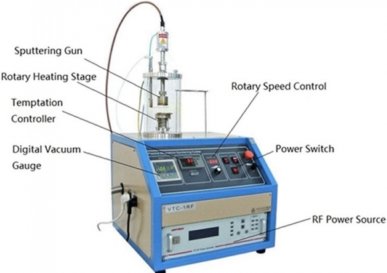
(VTC-1RF) equipment to the cleanroom. VTC-1RF is a single head 1" RF Plasma magnetron sputtering system designed for non-metallic thin film coating, mainly for multilayer oxide thin films. It is capable of depositing metals like Pt, Cu, Au etc. At current we have 99.95% pure Pt target available for all users.
RF Magnetron Sputtering System — MTI VTC-1RF
The MTI VTC-1RF RF Magnetron Sputtering System is a compact thin-film deposition tool designed for coating conductive and non-conductive materials, particularly oxide thin films. The system utilizes RF plasma to sputter material from a target onto a substrate under controlled vacuum conditions, enabling uniform and high-quality film deposition.
Key Features
- 13.56 MHz RF power supply (up to 100 W) for plasma generation
- Single 1” magnetron sputtering head with water cooling
- Quartz vacuum chamber with base pressure up to ~10⁻⁶ Torr (with upgrades)
- Integrated vacuum system and gas inlet (Ar or reactive gases)
- Substrate heating up to ~700 °C with programmable control
- Rotating sample holder (1–10 rpm) for uniform coating
- Quartz crystal thickness monitor for real-time deposition tracking
- Adjustable sputtering distance and manual shutter control
Typical Operation Workflow
- Mount substrate on heated/rotating sample holder
- Load sample and seal vacuum chamber
- Pump down to base pressure and purge with inert gas (Ar)
- Set working pressure (~10–100 Pa depending on process)
- Ignite plasma using RF generator and tune matching network
- Perform pre-sputtering to clean target surface
- Open shutter and begin deposition
- Monitor thickness and deposition rate in real time
- Shut down plasma, vent chamber, and retrieve sample
System Functionality
- Thin Film Deposition: Uniform coating of metals, oxides, and compounds
- RF Plasma Generation: Enables sputtering of insulating materials
- Thickness Monitoring: Quartz crystal microbalance (QCM) with Å-level resolution
- Substrate Control: Heating and rotation for improved film quality
- Process Control: Adjustable gas pressure, RF power, and deposition time
Training and Usage
Users are trained on:
- Target installation and system setup
- Vacuum operation and gas flow control
- RF power tuning and plasma ignition
- Deposition parameter optimization (power, pressure, time)
- Thickness monitoring and calibration
Safety Considerations
- High voltage RF power and plasma generation
- Vacuum system and pressurized gas handling
- Cooling water required for sputtering head
- Operate with proper grounding and shielding
- Avoid exposure to plasma and hot surfaces
RF Power Supply — MTI RF-300I-LD (300W RF Generator with Auto Matching)
13.56 MHz RF generator with auto-matching network for stable plasma generation. Provides controlled power for sputtering and plasma processes. Ensures consistent deposition conditions.
The MTI RF-300I-LD RF Generator is a compact 13.56 MHz power supply with an integrated automatic matching network, designed to drive RF plasma processes such as magnetron sputtering. It provides stable and adjustable RF power for thin film deposition, particularly for insulating and dielectric materials.
Key Features
- RF frequency: 13.56 MHz (industry standard for plasma processing)
- Output power: 5–300 W adjustable with high stability (±1%)
- Integrated auto-matching network for impedance matching
- Automatic and manual operation modes
- Air-cooled compact design
- Low noise operation (<50 dB)
- Compatible with magnetron sputtering sources
Typical Operation Workflow
- Connect RF generator to sputtering head and vacuum system
- Power on system and select AUTO matching mode
- Set desired RF power using control interface
- Initiate plasma (RF ON)
- System automatically matches impedance for stable plasma
- Adjust power as needed for deposition rate control
- Turn OFF RF power after process completion
System Functionality
- RF Plasma Generation: Provides energy to ionize process gas (e.g., Ar)
- Auto Matching: Automatically tunes impedance to maximize power transfer
- Stable Power Delivery: Ensures consistent plasma conditions
- Process Control: Adjustable power directly affects deposition rate and film properties
Training and Usage
Users are trained on:
- RF system startup and shutdown procedures
- Auto vs. manual matching modes
- Power tuning and plasma stability monitoring
- Integration with sputtering systems
- Basic troubleshooting and safe operation
Safety Considerations
- High voltage RF power — shock hazard
- Proper grounding required before operation
- Do not operate with flammable or reactive gases
- Avoid exposure to live RF connections
- Ensure proper cooling and ventilation
Detailed Safety Considerations – RF Magnetron Sputtering System
The RF magnetron sputtering system involves hazards related to RF high voltage, plasma generation, vacuum systems, pressurized gases, thermal exposure, and material deposition processes. Only trained and authorized users are permitted to operate the system. All users must follow cleanroom protocols, system SOPs, and review relevant safety documentation prior to operation.
RF Power and Electrical Safety
- The system operates using a 13.56 MHz RF power supply (up to 300 W), which presents significant electrical hazards.
- Never touch RF cables, connectors, or electrodes during operation
- Ensure all RF connections are secure before powering the system
- Do not operate with exposed or damaged cables
- Proper grounding of the system is mandatory before use
- Do not bypass interlocks or safety systems
- Turn off RF power before making any adjustments to the chamber or target
Plasma and Radiation Hazards
- RF sputtering generates high-energy plasma, which can cause burns and emit electromagnetic radiation.
- Do not open the chamber or view ports during plasma operation
- Avoid direct exposure to plasma glow or active discharge regions
- Ensure chamber is fully closed before plasma ignition
- Verify shielding and interlocks are functioning properly
- Monitor plasma stability to avoid arcing or abnormal discharge
High Vacuum and Pressure Hazards
- The system operates under low pressure (vacuum) and controlled gas flow, creating risks of implosion and pressure imbalance.
- Ensure chamber is properly sealed before pump-down
- Never open the chamber under vacuum
- Vent the chamber slowly to prevent particle disturbance and damage
- Check vacuum lines, seals, and gauges before operation
- Avoid rapid pressure changes during gas introduction or venting
Process Gas Safety (Argon and Reactive Gases)
- Sputtering uses inert (Ar) and sometimes reactive gases, which can pose asphyxiation or chemical hazards.
- Use only approved gases for the system
- Verify gas lines and regulators are leak-free before operation
- Do not use flammable or incompatible gases
- Ensure proper ventilation in the cleanroom
- Close gas supply valves after use
Cooling Water System Safety
- The sputtering head requires continuous water cooling to prevent overheating.
- Verify cooling water flow before initiating RF power
- Never operate the system without active cooling
- Monitor water lines for leaks or flow interruptions
- Shut down system immediately if cooling fails
Thermal and Burn Hazards
- The system can reach high temperatures, especially at the target and substrate heater (~700 °C).
- Do not touch the target, substrate holder, or heater after operation
- Allow sufficient cooling time before opening the chamber
- Use appropriate tools (tweezers, wafer tongs) when handling substrates
- Be cautious of residual heat in deposited materials
Target Material and Deposition Hazards
- Sputtering targets (e.g., Pt, Cu, Au) and deposited materials can present contamination and exposure risks.
- Handle targets with clean gloves to avoid contamination
- Ensure proper target mounting to prevent arcing or detachment
- Avoid inhalation of sputtered material residues during maintenance
- Perform pre-sputtering to clean target surface before deposition
- Do not operate with damaged or cracked targets
Mechanical Hazards
- The system includes rotating sample holders, shutters, and adjustable components.
- Keep hands clear of moving parts during operation
- Ensure substrates are securely mounted before pump-down
- Do not adjust internal components while system is active
- Verify proper alignment before starting deposition
Deposition Process Hazards
- Improper operation can result in arcing, unstable plasma, or non-uniform deposition.
- Gradually increase RF power to avoid plasma instability
- Monitor pressure, power, and plasma condition continuously
- Ensure correct matching network operation (AUTO mode recommended)
- Avoid sudden changes in gas flow or power settings
- Stop process immediately if arcing or abnormal behavior occurs
RF Generator (MTI RF-300I-LD) Safety
- Ensure generator is properly grounded before operation
- Do not operate with open panels or exposed wiring
- Avoid contact with RF output terminals
- Use AUTO matching mode for stable plasma unless trained otherwise
- Turn off RF power before connecting or disconnecting cables
- Ensure adequate ventilation for generator cooling
PPE Requirements
- Cleanroom garments (as per facility classification)
- Safety glasses
- Chemical-resistant gloves when handling targets or samples
- Additional PPE may be required depending on materials and process conditions.
Operational Safety Checks (Pre-Run)
- Cooling water is active and stable
- Chamber is clean and properly sealed
- Target is correctly installed
- Substrate is mounted securely
- Gas supply and pressure are properly set
- RF connections and grounding are verified
- Vacuum system is functioning within limits
- Interlocks are active
Post-Operation Safety
- Turn off RF power before venting
- Allow system to cool before opening
- Vent chamber slowly
- Remove samples using appropriate tools
- Inspect chamber and clean if necessary
- Log system usage and report abnormalities
Waste Handling and Contamination Control
- Dispose of wipes, used targets, and contaminated materials in designated containers
- Do not dispose of materials in drains
- Maintain chamber cleanliness to prevent cross-contamination
- Follow cleanroom waste management protocols
Emergency Procedures
- RF/electrical fault → shut down system immediately
- Vacuum failure → stop process and isolate system
- Cooling failure → terminate RF power immediately
- Gas leak → close supply and notify staff
- Plasma instability or arcing → stop process and report
- Do not resume operation until the system has been inspected and cleared.
General Cleanroom Conduct
- Use only approved materials and processes
- Maintain strict cleanliness standards
- Avoid cross-contamination between targets and samples
- Report equipment issues promptly
- Do not modify system parameters beyond authorized limits
Sputtering Training – Session Coverage
During the training session, the following topics and steps will be covered:
-
Overview of RF magnetron sputtering principles and thin film deposition
-
System components (vacuum chamber, magnetron head, RF generator, gas system, substrate holder)
-
Cleanroom safety, RF power safety, plasma hazards, and vacuum operation
-
Target handling, installation, and material considerations (e.g., Pt)
-
Substrate mounting and positioning (including heating and rotation if applicable)
-
Vacuum system operation (pump-down, base pressure, and leak awareness)
-
Gas flow setup and pressure control (e.g., Argon environment)
-
RF generator operation and plasma ignition (AUTO matching mode)
-
Pre-sputtering for target conditioning
-
Deposition process setup (power, pressure, time)
-
Monitoring deposition rate and thickness (QCM if applicable)
-
Controlling film properties through process parameters
-
Safe shutdown, plasma termination, and chamber venting
-
Sample removal and post-process handling
-
Common issues (arcing, unstable plasma, non-uniform films) and basic troubleshooting
-
Cleanup, contamination control, and system readiness
Note: Training is conducted using standard substrates and facility-available targets, focusing on safe operation and understanding of the complete deposition process; users are responsible for carrying and advancing their own research projects.
