
Focused Ion Beam
Focused ion beam system for nanoscale imaging, milling, and deposition. Enables precise material removal and cross-sectioning. Used for device analysis and nanofabrication.
Location: SE1 154 (cleanroom Class 1000)
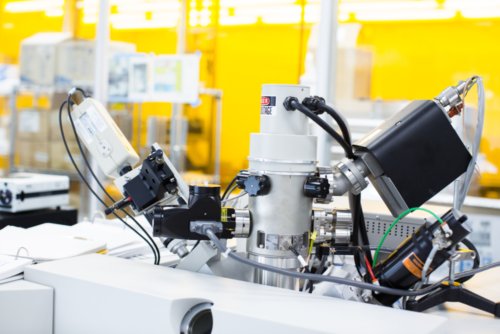
FIB setup uses a focused beam of ions for high-resolution imaging and machining of the materials at micro- or nano-scales.
FIB applications include High-resolution imaging, Material etching, and metal deposition.
At current, this tool offers Pt metal deposition.
Focused Ion Beam (FIB) System — FEI 800x Ion Beam Microscope
The FEI 800x Focused Ion Beam (FIB) Microscope is a high-resolution nanofabrication and imaging system that uses a focused beam of gallium ions (Ga⁺) to mill, deposit, and image materials at the micro- and nanoscale. The system enables precise site-specific material removal, cross-sectioning, and thin film deposition for advanced research applications.
Key Features
- Gallium (Ga⁺) liquid metal ion source (LMIS) for focused ion beam generation
- High-voltage ion column (typically up to ~30 kV)
- Variable beam current for imaging (low current) and milling (high current)
- Gas Injection System (GIS) for material deposition (e.g., Pt)
- Nanometer-scale milling and deposition capability
- Integrated detectors for secondary electron/ion imaging
- High-precision stage with tilt and eucentric height control
Typical Operation Workflow
- Mount conductive sample on holder (use conductive tape if needed)
- Load sample via load-lock into vacuum chamber
- Set eucentric height for accurate beam alignment
- Select beam parameters (voltage, current, aperture)
- Perform imaging using low beam current
- Define milling or deposition pattern
- Execute milling (material removal) or deposition (e.g., Pt coating)
- Monitor process and adjust parameters as needed
- Complete process and unload sample
System Functionality
- Imaging: High-resolution surface imaging using secondary electrons/ions
- Milling: Precise material removal via ion sputtering (nm–µm scale)
- Deposition: Localized material deposition using GIS
- 3D Analysis: “Slice-and-view” capability for serial sectioning and reconstruction
Training and Usage
Users are trained on:
- Sample preparation and conductive mounting
- Beam parameter selection (current, voltage, aperture)
- Imaging vs. milling modes
- Pattern definition and process control
- Safe operation and system navigation
Safety Considerations
- Operates under high voltage and high vacuum
- Ion beam interaction can damage samples
- Proper grounding and conductive mounting required
- Avoid contamination of chamber and components
- Follow system-specific operational and shutdown procedures
Detailed Safety Considerations – Focused Ion Beam (FIB) System
The Focused Ion Beam (FIB) system involves hazards related to high voltage, ionizing radiation, vacuum systems, toxic materials, and gas injection processes. Only trained and authorized users may operate the system. All users must follow cleanroom protocols, system SOPs, and review relevant safety documentation prior to use.
High Voltage and Electrical Safety
- The FIB column operates at high accelerating voltages (up to ~30 kV) and presents serious electrical hazards.
- Never open system panels or access internal components during operation
- Do not bypass interlocks or grounding systems
- Ensure proper grounding of the sample and holder before operation
- Only authorized personnel may perform maintenance or troubleshooting
- Immediately stop operation and report any electrical irregularities
Ion Beam and Radiation Hazards
- The gallium (Ga⁺) ion beam can cause localized radiation effects and material damage.
- Avoid unnecessary exposure to the ion beam path
- Do not operate the system with compromised shielding or interlocks
- Be aware that beam interaction can modify or damage materials unintentionally
- Use appropriate beam currents for imaging vs. milling to minimize damage
- Monitor beam conditions continuously during operation
Gallium (Ga⁺) Source Safety
- The liquid metal ion source (LMIS) contains gallium, which may pose contamination and material hazards.
- Avoid contact with internal source components
- Do not attempt to service or replace the ion source unless authorized
- Prevent contamination of the chamber from improper sample materials
- Follow proper procedures for handling contaminated samples
High Vacuum and Pressure Hazards
- The system operates under high vacuum conditions, requiring careful handling.
- Ensure proper sealing of the chamber before pump-down
- Never open the chamber under vacuum
- Vent the chamber slowly using prescribed procedures
- Verify load-lock operation before sample transfer
- Inspect viewports and seals for integrity
Gas Injection System (GIS) Safety
- The GIS system is used for deposition (e.g., Pt) and may involve hazardous precursor gases.
- Operate GIS only after proper training
- Ensure correct gas selection and line configuration
- Avoid exposure to precursor gases or decomposition byproducts
- Do not activate GIS unless the chamber is under proper vacuum conditions
- Report leaks, unusual odors, or abnormal deposition behavior immediately
Material Interaction and Sample Hazards
- Ion beam interaction can cause sputtering, redeposition, heating, and sample damage.
- Ensure samples are compatible with vacuum and ion beam exposure
- Avoid using volatile, non-conductive, or outgassing materials
- Secure samples properly to prevent movement during milling
- Be cautious of redeposition effects during high-current milling
- Use conductive coatings or grounding to prevent charging
Thermal and Localized Heating Hazards
- High beam currents can cause localized heating of the sample.
- Avoid prolonged exposure at high beam currents
- Monitor sensitive materials for thermal damage
- Use appropriate beam settings for delicate structures
- Allow samples to cool before handling after processing
Mechanical Hazards
- The system includes precision stages and moving components.
- Keep hands clear during stage movement and loading/unloading
- Do not manually adjust stage or internal components during operation
- Ensure proper sample mounting before insertion
- Verify stage clearance before tilt or rotation
Contamination Control
- FIB systems are highly sensitive to contamination.
- Use only clean, approved samples and mounting materials
- Avoid introducing oils, dust, or non-cleanroom materials into the chamber
- Clean sample holders before and after use
- Prevent cross-contamination between different materials
PPE Requirements
- Cleanroom garments (as per facility classification)
- Safety glasses
- Gloves for handling samples and holders
- Additional PPE may be required when handling contaminated or processed samples.
Operational Safety Checks (Pre-Run)
- Sample is properly mounted and conductive
- Chamber and holder are clean
- Correct beam parameters are selected
- GIS (if used) is properly configured
- Vacuum system is stable and within limits
- Interlocks and system status are normal
Post-Operation Safety
- Return beam to safe standby condition
- Allow sample to cool if exposed to high beam current
- Vent chamber properly before unloading
- Remove sample using appropriate tools
- Clean holder and workspace
- Log usage and report any abnormalities
Waste Handling and Contamination Control
- Dispose of contaminated wipes, tapes, and sample debris in designated containers
- Do not discard materials in regular trash or drains
- Handle Ga-contaminated materials according to facility protocols
- Maintain proper segregation of waste materials
Emergency Procedures
- Electrical issue → stop system and notify staff
- Vacuum failure → terminate operation immediately
- Gas leak or GIS malfunction → stop process and report
- Unusual beam behavior or instability → stop and notify staff
- Exposure incident → follow cleanroom emergency procedures
- Do not resume operation until the system has been inspected and cleared.
General Cleanroom Conduct
- Use only approved samples and processes
- Maintain strict cleanliness standards
- Avoid contamination and improper materials
- Report system issues immediately
- Do not modify system settings beyond authorized limits
Focused Ion Beam (FIB) Training – Session Coverage
During the training session, the following topics and steps will be covered:
-
Overview of FIB principles (imaging, milling, and deposition)
-
System components (ion column, stage, detectors, GIS, vacuum system)
-
Cleanroom safety, high-voltage awareness, and vacuum safety
-
Sample preparation and conductive mounting techniques
-
Load-lock operation and sample loading/unloading procedures
-
Setting eucentric height and stage alignment
-
Beam parameter selection (voltage, current, aperture)
-
Imaging operation using low beam currents
-
Milling operations (pattern definition and material removal)
-
Gas Injection System (GIS) operation for deposition (e.g., Pt)
-
Monitoring process behavior and adjusting parameters
-
Managing beam effects (charging, redeposition, damage)
-
Safe shutdown and system standby procedures
-
Common issues and basic troubleshooting
-
Cleanup, contamination control, and system readiness
Note: Training is conducted using standard samples and facility-approved conditions, focusing on safe operation and understanding of imaging, milling, and deposition processes; users are responsible for carrying and advancing their own research projects.
